Of Interest ·
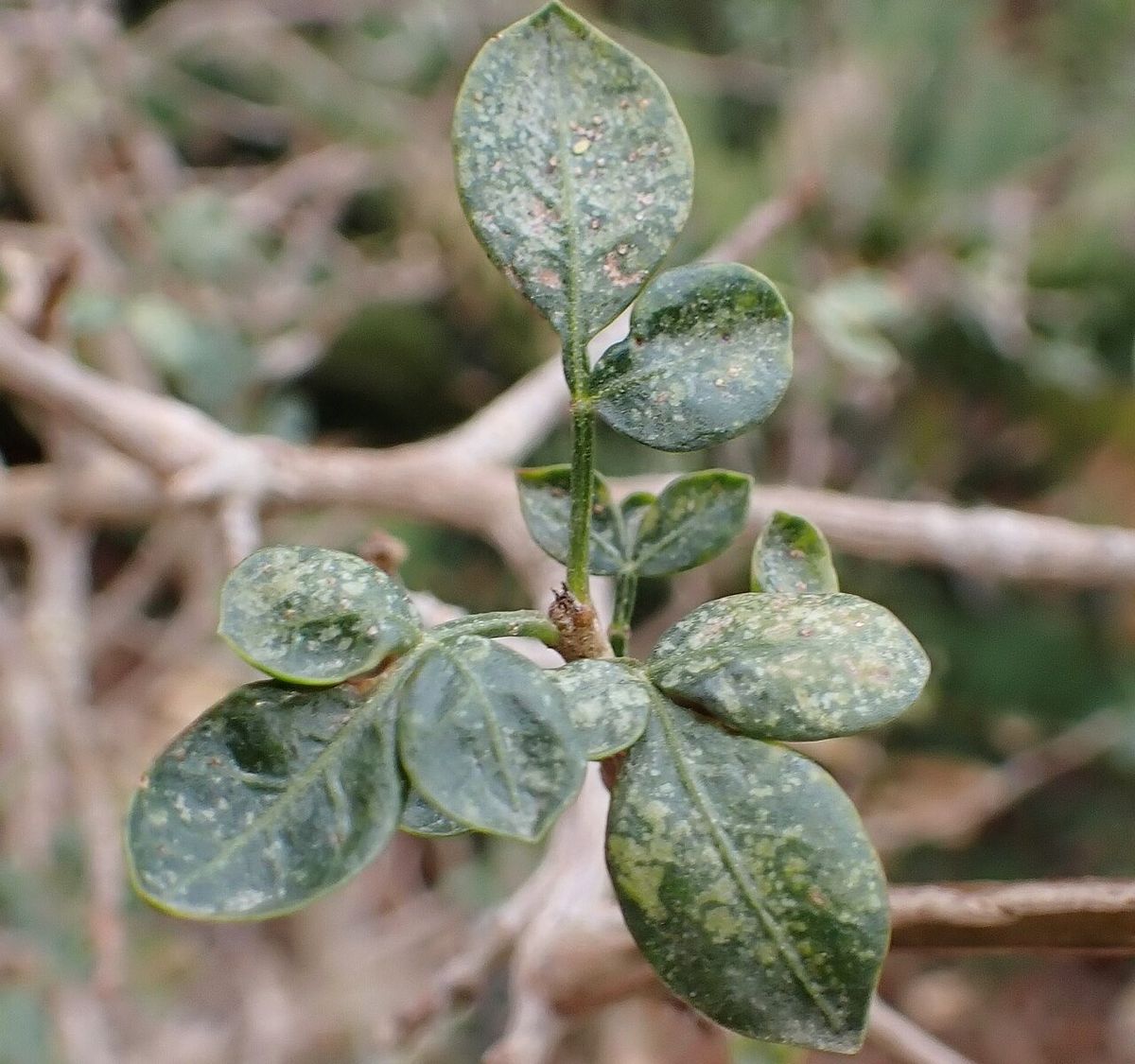
Scientists grew a tree from a 1,000-year-old seed. It may be the Bible’s balm of Gilead.
A seed found in a cave in the Judean wilderness has grown into a living tree that no one has seen in centuries. The team that raised it believes its resin may be the healing balm the prophets wrote about.
by VRSZ Editors · October 30, 2026 · 6 min read
A seed from a desert cave
In 2010, a single seed went into a pot of sterile soil at Kibbutz Ketura in Israel’s Arava valley. It had been found decades earlier in Cave 1 of the Lower Wadi el-Makkuk, a dry canyon in the Judean wilderness north of Jerusalem, during excavations led by the archaeologist Joseph Patrich in 1986–87. Nobody knew what kind of tree it came from or how old it was.
About five and a half weeks after planting, a shoot appeared. “Up jumps this nice little shoot,” Dr. Sarah Sallon told CNN. Sallon is the physician who founded the Louis L. Borick Natural Medicine Research Center at Hadassah Medical Center in Jerusalem, and she led the project. The seed was germinated by her longtime partner in the work, the agricultural scientist Dr. Elaine Solowey of the Arava Institute for Environmental Studies.
When the seedling shed the small cap that had protected its tip, the team sent that tissue for radiocarbon dating. The result placed the seed between AD 993 and 1202. Sallon nicknamed the tree “Sheba.”
A tree nobody could name
As Sheba grew, it put out leaves, and botanists who saw photographs recognized the genus Commiphora. It is a family of about 200 species of trees and shrubs, found mostly in Africa, Madagascar and Arabia. It includes the myrrh tree, and also the Judean balsam, whose fragrant resin made the oasis around the Dead Sea famous in the ancient world.
Dr. Andrea Weeks of George Mason University sequenced Sheba’s DNA. It belonged to Commiphora, but it matched none of the known species she compared it with. The team reported its findings in the journal Communications Biology on September 10, 2024. They concluded that Sheba most likely represents a species that is now extinct, or no longer grows wild, and that was once native to the region around the Judean Desert.
Today the tree is more than 14 years old and about 10 feet tall, with papery, peeling bark and a clear resin. It has not yet flowered or borne fruit, and botanists normally need flowers and fruit to describe a new species. “Since ‘Sheba’ has not flowered,” the authors wrote, “we do not have reproductive material to attempt a species description at this time.”
Balm, not perfume
Sallon’s first hunch was that Sheba might be the Judean balsam itself, the perfume tree of antiquity. Its resin was prized across the Roman world. “Why did we wait so long (to publish the research)?” she told CNN. “Because I wanted to make sure that it wasn’t the Judean Balsam. And how would I definitively know that? By smelling it.”
Sheba has almost no scent. When the team analyzed its resin, leaves and branches, they found no aromatic compounds of the kind found in myrrh. They found compounds with a long record in medicine instead. These included guggulterols, which have been studied in the resin of a related tree, Commiphora wightii, and a high level of squalene, which the authors note has been linked to benefits for the skin. “It’s not the Judean balsam, it’s a close cousin of it,” Sallon said, “and one of the non-aromatic Commiphora that is a treasure chest of medicinal compounds.”
That led the researchers to their central idea. Sheba may be the source of a healing resin the Hebrew Bible calls tsori, translated “balm” in the King James Version. It was valued for healing rather than fragrance. They also suggest that the tree may once have served as a rootstock for the cultivated Judean balsam.
The balm in Scripture
Tsori runs through the Old Testament as a precious export of the land. The traders who bought Joseph were “a company of Ishmeelites” who “came from Gilead with their camels bearing spicery and balm and myrrh” (Genesis 37:25). When Jacob sent his sons back to Egypt, he told them to carry “a little balm, and a little honey” as a gift (Genesis 43:11). Ezekiel lists balm among the goods that Judah and Israel sold in the markets of Tyre (Ezekiel 27:17).
Above all, balm meant healing. Jeremiah tells Egypt, “Go up into Gilead, and take balm” (Jeremiah 46:11). Of fallen Babylon he says, “take balm for her pain, if so be she may be healed” (Jeremiah 51:8). Most famously, he grieves over his own people: “Is there no balm in Gilead; is there no physician there? why then is not the health of the daughter of my people recovered?” (Jeremiah 8:22).
Before Sheba, Methuselah
Sheba is not the team’s first resurrection. In March 2005, Solowey germinated a date seed recovered in the 1960s from the excavations at Masada, Herod’s fortress above the Dead Sea. Radiocarbon dating placed the seed around 2,000 years ago, and the team reported the result in Science in 2008. Sallon named the seedling Methuselah, after the longest-lived man in the Bible.
Methuselah was the oldest seed ever known to have sprouted, and he is now a full-grown palm in the Arava Institute’s research park at Kibbutz Ketura. He belongs to the Judean date palm, a variety prized in antiquity that had long since vanished. The institute notes that the seed “existed at a time when the teachings of Jesus were beginning to spread.” Sheba was germinated with the same method of soaking and planting.
Seeds that survive so long are rare. “What’s surprising in this story is it was just a single seed and to be able to have one chance for that to germinate is extremely lucky,” Dr. Louise Colville of the Royal Botanic Gardens, Kew, told CNN. She was not involved in the research.
The physician of souls
For Christians, Jeremiah’s question has always reached further than medicine. The prophet was not asking about a shortage of resin. He was asking why a people with every remedy at hand stayed sick, and Scripture answers that the cure is a Person. “They that be whole need not a physician, but they that are sick,” Jesus said (Matthew 9:12).
St. Basil the Great took up Jeremiah’s words in a letter to a young woman who had broken her vows. He urged her not to despair. “You might indeed find many remedies for evil in Scripture,” Basil wrote, “many medicines to save from destruction and lead to health.” He went on: “The great Physician of souls, Who is the ready liberator, not of you alone, but of all who are enslaved by sin, is ready to heal your sickness.”
The old spiritual gives the same answer to the prophet’s question: “There is a balm in Gilead to make the wounded whole.” A seed that lay silent for a thousand years in a desert cave and then sent up a green shoot is a fitting picture of that hope.
“The great Physician of souls, Who is the ready liberator, not of you alone, but of all who are enslaved by sin, is ready to heal your sickness.”
Basil the Great · Letter 46
Read it for yourself
Open VRSZ, tap Jeremiah 8:22, and read what the commentators say about the balm in Gilead and the physician who heals.
Jeremiah viii. 22
22Is there no balm in Gilead; is there no physician there? why then is not the health of the daughter of my people recovered?
Read the commentaries on Jeremiah 8:22Know someone who would want to read this?
Sources quoted
- Sarah Sallon et al., “Characterization and analysis of a Commiphora species germinated from an ancient seed suggests a possible connection to a species mentioned in the Bible,” Communications Biology 7 (September 10, 2024).
- Katie Hunt, “Lost biblical plant with medicinal properties resurrected from 1,000-year-old seed,” CNN, October 3, 2024.
- Sarah Sallon et al., “Germination, Genetics, and Growth of an Ancient Date Seed,” Science 320 (2008), 1464.
- Arava Institute for Environmental Studies, “Methuselah.”
- Basil the Great, Letter 46, §5, trans. Blomfield Jackson, Nicene and Post-Nicene Fathers, Second Series, vol. 8.
- Scripture quotations from the King James Version.
- Header photo: Judean balsam (Commiphora gileadensis), a relative of Sheba in the same genus, at the Ein Gedi Botanical Garden. Photo: Krzysztof Ziarnek, Kenraiz, CC BY-SA 4.0, via Wikimedia Commons (cropped).