Read ·
Read what the early Church said about the Beatitudes
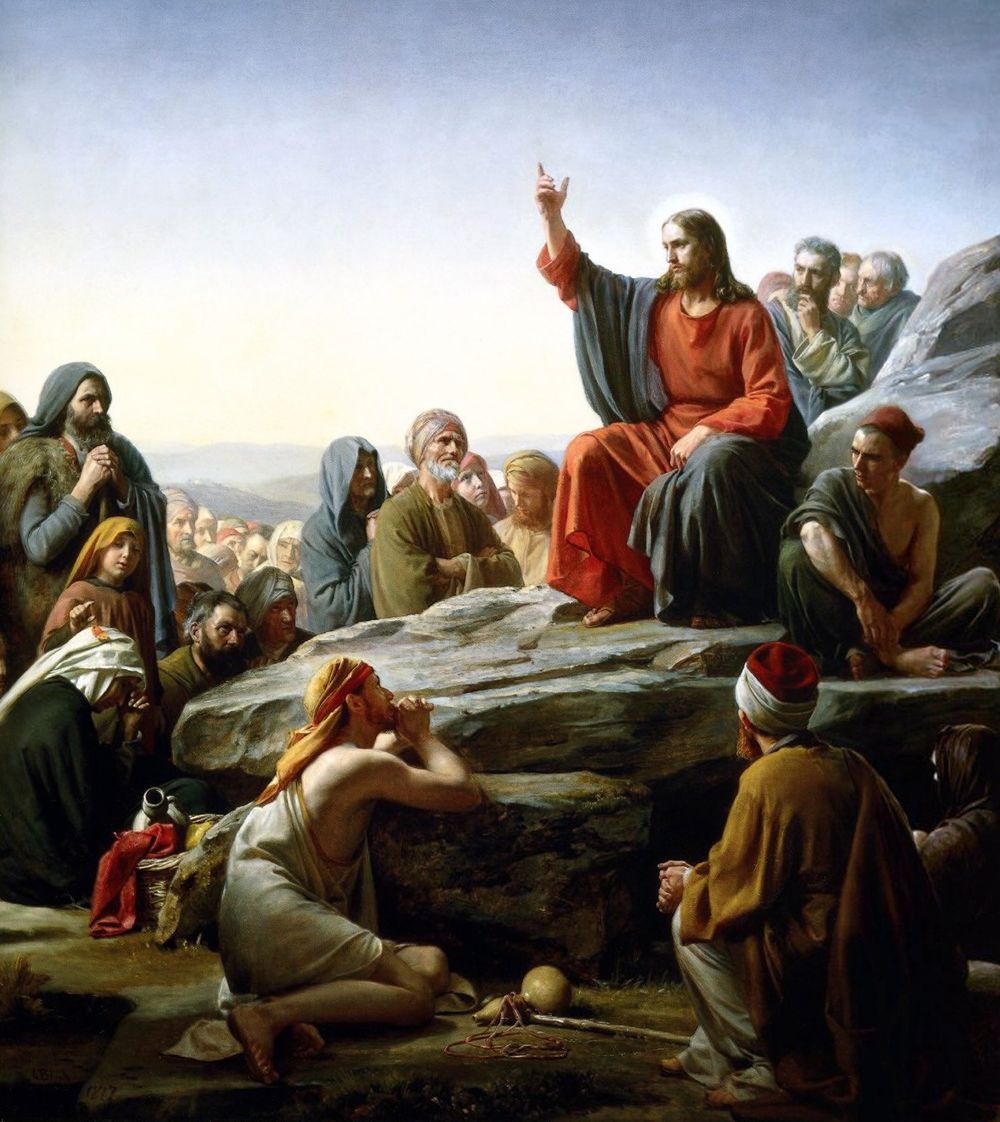
Eight short sayings open the Sermon on the Mount, and each one turns the world’s idea of happiness upside down: the poor, the mourners and the persecuted are the ones Jesus calls blessed. With All Saints’ Day coming on November 1, many Christians are reading them again as a portrait of a holy life. Here is what early Christian writers said about Matthew 5:3–12.
by VRSZ Editors · October 21, 2026 · 2 min read
Eight sentences, one life
Augustine of Hippo thought that anyone who read this sermon carefully would find in it “a perfect standard of the Christian life.” John Chrysostom, preaching in Antioch, noticed that Jesus said “Blessed are the poor,” not “Blessed are you”: the promises were meant for everyone who would ever hear them.
Here are four places to start.
Matthew 5:3 · Poor in spirit
“Blessed are the poor in spirit: for theirs is the kingdom of heaven.” Chrysostom asked what the phrase means and answered in one line: “The humble and contrite in mind.” He stressed that the blessing is for those who choose humility, not those forced into it, and that no one is shut out: “though you be a slave, a beggar, in poverty, a stranger, unlearned, there is nothing to hinder you from being blessed.”
Tap Matthew 5:3 on VRSZ.
Matthew 5:4 · They that mourn
“Blessed are they that mourn: for they shall be comforted.” Chrysostom read this as grief over sin, your own and other people’s, and turned it into a paradox: “if you will be comforted, mourn: and think not this a dark saying.” Augustine linked the promised comfort to the Holy Spirit, whose very name, the Paraclete, means the Comforter.
Tap Matthew 5:4 on VRSZ.
“He has woven a sort of golden chain for us.”
John Chrysostom · Homilies on Matthew 15
Matthew 5:8 · They shall see God
“Blessed are the pure in heart: for they shall see God.” Augustine pointed out that this is the only beatitude that promises the sight of God, and he said why: “there, in the heart, are the eyes, by which God is seen.” Elsewhere he put it more bluntly: “How foolish, therefore, are those who seek God with these outward eyes, since He is seen with the heart!”
Tap Matthew 5:8 on VRSZ.
Matthew 5:9 · The peacemakers
“Blessed are the peacemakers: for they shall be called the children of God.” Chrysostom noticed that Jesus asks for more than keeping out of quarrels. Peacemakers bring together people who are fighting, and in that they share the work of the Son: “to unite the divided, and to reconcile the alienated.”
Tap Matthew 5:9 on VRSZ.
Keep reading
Chrysostom saw the eight sayings as steps, each one making way for the next, from humility and mourning through mercy and purity to peacemaking and courage under insult. Open VRSZ at Matthew 5:3 and climb them a verse at a time, with the early commentators beside you.
Matthew v. 8
8Blessed are the pure in heart: for they shall see God.
Read the commentaries on Matthew 5:8Know someone who would want to read this?
Sources quoted
- John Chrysostom, Homilies on Matthew 15, trans. George Prevost, rev. M. B. Riddle (NPNF, 1st series, vol. 10), newadvent.org/fathers/200115.htm.
- Augustine of Hippo, On the Sermon on the Mount 1.1.1, 1.2.5 and 1.2.8, trans. William Findlay, rev. D. S. Schaff (NPNF, 1st series, vol. 6), newadvent.org/fathers/16011.htm.
- Augustine of Hippo, Sermons on the New Testament 3 (Ben. 53).6 (NPNF, 1st series, vol. 6), newadvent.org/fathers/160303.htm.
- Matthew 5:3–12, King James Version.