News ·
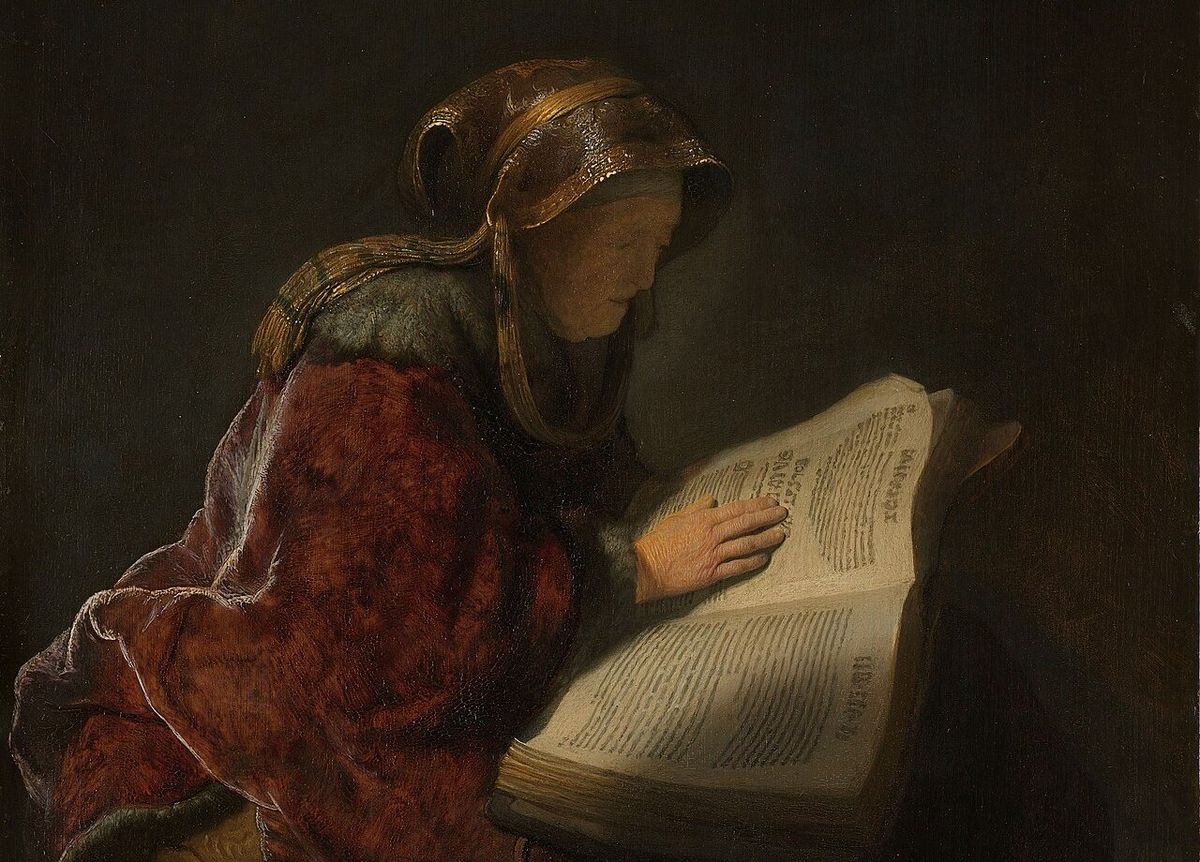
Two in three churchgoers failed a Lifeway Research Bible quiz. Daily readers scored nearly twice as high.
A new national study tested more than 2,000 American Christian churchgoers on the people, books and words of Scripture. The average score was 51, and the strongest predictor of a good grade was opening the Bible every day.
by VRSZ Editors · November 4, 2026 · 5 min read
A pop quiz in the pews
Lifeway Research, the Nashville-area research arm of Lifeway Christian Resources, has given American churchgoers a Bible quiz, and most of them failed it. In a study released November 3, 2026, Lifeway asked 2,012 Christian churchgoers dozens of questions about general Bible knowledge. The average respondent scored 51 out of 100.
About two in three (65%) earned an F, scoring below 60. Nine percent earned a D, 9% a C and 8% a B. Nine percent scored 90 or higher for an A.
“Church leaders often theorize that churchgoers don’t know their Bibles but have typically lacked objective proof,” said Scott McConnell, executive director of Lifeway Research. “This study confirms most Christian churchgoers haven’t learned or don’t remember many things in the Bible and how it is organized.”
Eight kinds of questions
The quiz covered eight areas. These were the people of the Bible, which books contain certain stories, the order of biblical events, filling in the blanks of verses, the major divisions of the Bible, whether a book is in the Old Testament, the New Testament or not in the Bible at all, whether a saying comes from Scripture, and general Bible knowledge.
“Significant examples were selected from the Bible for the questions rather than obscure characters or events,” McConnell said. “The goal was not to trick anyone but to understand their recall of what they have read and been taught.”
What churchgoers knew, and what they missed
*People.* Nearly everyone (94%) knew that Moses received the Ten Commandments. Only 45% named Saul as Israel’s first king; 32% said David.
*Verses.* Four in five (80%) could supply the missing word “believes” in John 3:16. Just 28% could complete Micah 6:8, which in the translation used for the quiz says the Lord requires us “to act justly, and to love faithfulness, and to walk humbly with your God.”
*Books.* Most knew the flood is in Genesis (64%), but only 35% knew Israel’s first king is anointed in 1 Samuel. Two in three (67%) wrongly identified Hezekiah as a book of the Bible, and 44% thought the Gospel of Thomas is in the Bible. A majority (55%) missed that Philemon is in the New Testament.
*Order.* Only 11% could put Deborah judging Israel, David killing Goliath, Jonah and the great fish, and Esther delivering her people in the right order.
*Sayings.* Three in four (74%) knew “Vengeance is mine; I will repay, says the Lord” is in the Bible. Only half (51%) knew “God shall help those who help themselves” is not.
“Churchgoers struggle the most with memorizing Bible verses, understanding the major divisions of the Bible and putting biblical events in the order they occurred,” McConnell said.
Reading makes the difference
The clearest pattern in the study was simple. People who read the Bible more knew it better. Churchgoers who read the Bible every day averaged 66, compared with 36 for those who rarely or never read it. Daily readers were the most likely to earn an A (19%) or a B (17%). Among those who rarely or never read Scripture, 91% failed.
In Lifeway’s analysis of what predicts a score, daily Bible reading added the most, 13.8 points. Reading a few times a week added 7.7 points, and reading the Bible “to help them know and relate to God” added 5.4.
Yet daily reading is not the norm. About one in five churchgoers (21%) read the Bible personally every day, and another 24% do so a few times a week. More than one in five (22%) say they rarely or never read it. The most common way churchgoers learn the Bible in a typical week is their pastor’s sermon (56%).
Church attendance mattered too. Those who attend four or more times a month averaged 55, compared with 44 for those who attend once a month. Men and women scored about the same, and there were no statistical differences by ethnicity. Average scores were 53% correct among those attending evangelical churches, 51% among Black Protestants, 49% among Catholics and 48% among mainline Protestants.
“Bible literacy comes with both reading and studying the Bible — digging to understand each passage but also moving throughout the Bible regularly to aid in remembering it,” McConnell said. “Knowing the Bible involves the heart, mind and emotions.”
“Knowing the Bible involves the heart, mind and emotions.”
Scott McConnell · Lifeway Research
How the study was done
Lifeway conducted the online survey August 12–29, 2026, using a national pre-recruited panel. Respondents identified as Protestant or nondenominational, Catholic or Orthodox Christian, and attend church in a typical month. Quotas and slight weights were used to balance gender, age, region, ethnicity, education and religion. The margin of error is plus or minus 2.2 percentage points at 95% confidence, and higher for subgroups.
Reading together
Lifeway’s findings point to an old remedy. Most churchgoers say they come to the Bible to know God, and those who read it every day know it best. McConnell said the study shows the importance of “helping people understand individual Bible passages and explaining the overall narrative that these episodes fit within.”
Christians have never had to read alone. For two thousand years, believers have read Scripture with those who came before them, the saints and teachers who prayed over the same pages. The verse most churchgoers could not finish is a good place to start.
Read it for yourself
Open VRSZ, tap Micah 6:8, and read what the commentators say about doing justly, loving mercy and walking humbly with God.
Micah vi. 8
8He hath shewed thee, O man, what is good; and what doth the LORD require of thee, but to do justly, and to love mercy, and to walk humbly with thy God?
Read the commentaries on Micah 6:8Know someone who would want to read this?
Sources quoted
- Aaron Earls, “2 in 3 Churchgoers Fail Bible Literacy Quiz,” Lifeway Research, November 3, 2026.
- Aaron Earls, “2 in 3 churchgoers fail Bible literacy quiz,” Baptist Press, November 3, 2026.
- Lifeway Research, Bible Literacy 2026 differences report.
- Micah 6:8 as quoted in the study follows the Christian Standard Bible. Other Scripture quotations from the King James Version.
- Header image: Rembrandt, Old Woman Reading, Probably the Prophetess Hannah, 1631. Rijksmuseum, Amsterdam. Public domain, via Wikimedia Commons (cropped).