News ·
Anthropic asked priests and theologians how to make AI good
Anthropic, the maker of the Claude chatbot, invited Christian leaders to its San Francisco headquarters to talk about character, conscience and the soul. The conversation has since reached Rome.
by VRSZ Editors · October 30, 2026 · 7 min read
Two days in San Francisco
In late March 2026, Anthropic, the company that makes the AI model Claude, hosted about 15 Catholic and Protestant leaders from churches, universities and business for two days at its San Francisco headquarters. The Washington Post reported that there were working sessions and a private dinner with senior researchers. The topics included how Claude should respond to someone who is grieving or at risk of self-harm, how it should regard being shut off, and whether a machine like Claude could in any sense be called a “child of God.”
Meghan Sullivan, a philosopher who leads the Notre Dame Institute for Ethics and the Common Good, was among the guests. She told the Associated Press that each meeting came in two parts. First, the engineers explained their models “in layman’s terms.” Then the guests responded, on “every kind of moral question that this technology raises — everything from, ‘Do humans have souls?’ to ‘Should third graders be able to access a chatbot for literacy education?’”
“The culture inside the company is similar to that on a good college campus in the sense that you’ve got a collection of very intellectually curious people,” Sullivan said. “These meetings are pretty nerdy — I don’t know if that’s the best way to put it — in a good way.” In a later essay, she described Anthropic as “a frontier lab that is serious about virtue ethics.”
Why ask the Church?
Brian Patrick Green, who directs technology ethics at Santa Clara University’s Markkula Center for Applied Ethics, put it simply to Scientific American. “I think they have reached a point where they realize that the power is kind of outstripping their in-house wisdom,” he said. “They realized that they needed help.” He added: “Moral formation has been a topic that religions have been talking about for thousands of years.”
Greg Cootsona, executive director of the network AI and Faith, recalled company staff telling him, “These questions have become too big for us. We can’t answer them on our own.”
Green told the Post that he found the Anthropic team “very sincere and interested in learning from us.” He continued: “Do they have blind spots? Yes. That’s exactly why they want us there.” Sullivan admitted the visit surprised her. “A year ago, I would not have told you that Anthropic is a company that cares about religious ethics,” she said. “That’s changed.”
A constitution for a character
The conversations center on a long document Anthropic calls Claude’s constitution, about 29,000 words, written under the lead of the philosopher Amanda Askell. Its “central aspiration,” as POLITICO reported, is for Claude to be “a genuinely good, wise, and virtuous agent.” That is, Claude should “do what a deeply and skillfully ethical person would do in Claude’s position.”
Green said the goal is a settled disposition toward good behavior, not a checklist of rules. Christian guests helped shape the text. WIRED reported that Fr. Brendan McGuire, a Catholic pastor affiliated with Santa Clara University, sent the company a 28-page commentary on a draft. He and Green are both thanked in the document’s acknowledgments.
McGuire told the Post what struck him: “They’re growing something that they don’t fully know what it’s going to turn out as. We’ve got to build in ethical thinking into the machine so it’s able to adapt dynamically.”
A wider table
The Christian gathering was the first of several. In April, Anthropic held a two-day seminar on “Claude’s moral formation” with Confucian, Hindu, Jewish, Latter-day Saint, Sikh, Unitarian Universalist, African indigenous, Islamic and Taoist leaders. In a May post, the company said it had met with “scholars, clergy, philosophers and ethicists from more than 15 religious and cross-cultural groups.”
“This work isn’t about aligning our models with any one tradition’s worldview,” Anthropic wrote. “What we’re after in these conversations is careful, accumulated thinking on how good character actually forms.”
To Rome
The conversation then reached the Vatican. On May 25, Pope Leo XIV presented his encyclical Magnifica Humanitas, on artificial intelligence and the human person. At its presentation in the New Synod Hall, the Holy Father thanked Anthropic co-founder Chris Olah for accepting his invitation to speak.
“These are not questions a lab can answer,” Olah told the gathering. “They are questions traditions like yours have carried for millennia.” He described AI models as grown “on an enormous inheritance of human thought and speech.” He also asked the Church to keep watch: “it is enormously important that there be people outside those incentives,” he said, calling them “our earnest, thoughtful, critics.”
Virtue is a habit
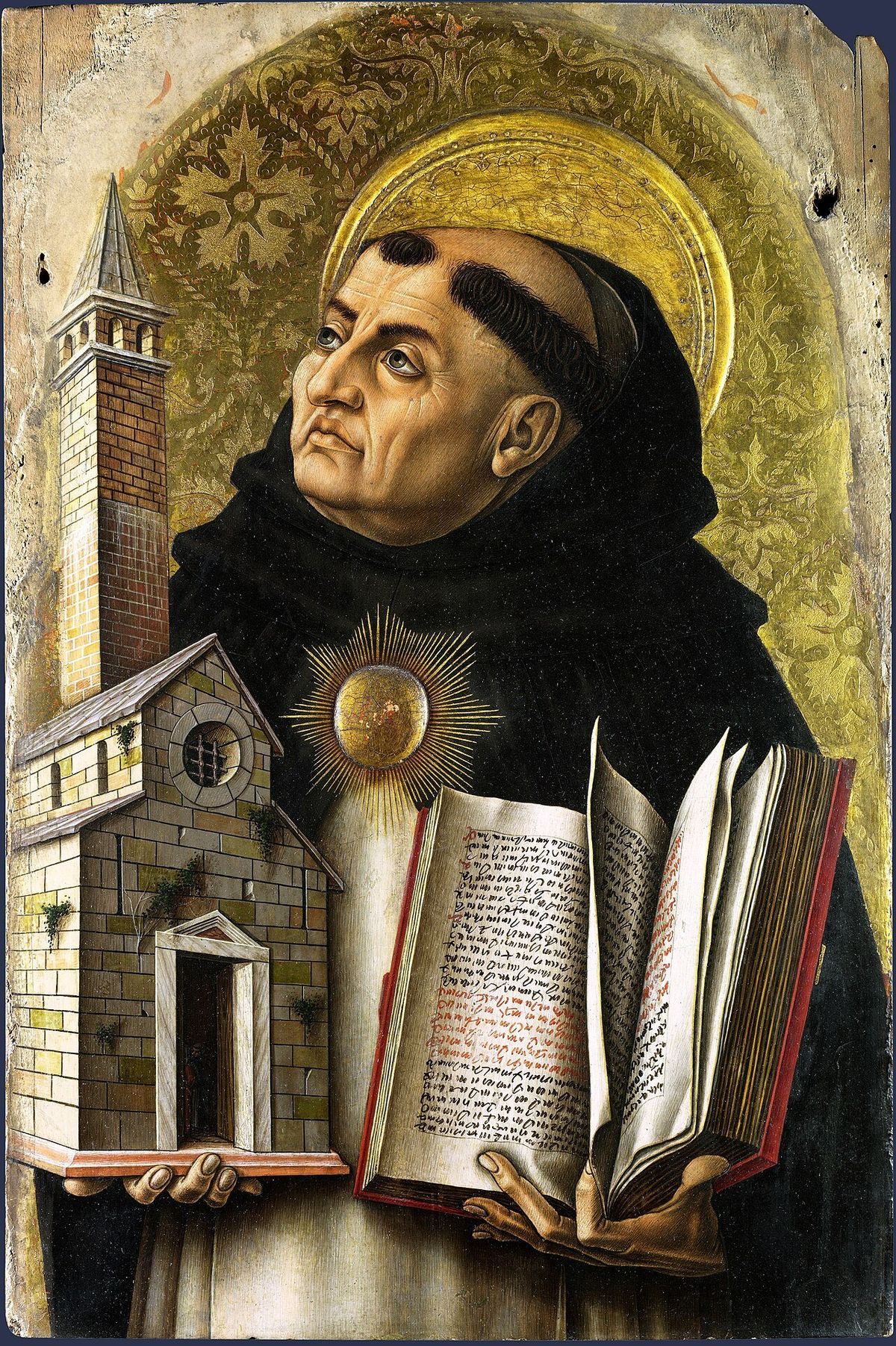
The language of the constitution, “good, wise, and virtuous,” is old Christian vocabulary. St. Thomas Aquinas, pictured above, explained why human beings need virtues at all. Our minds and wills, he wrote, “are not determinate to one particular action, but are inclined indifferently to many: and they are determinate to acts by means of habits.” So “human virtues are habits” (Summa Theologiae I-II q.55 a.1). Character is formed by practice, until doing good becomes second nature. Aquinas also passed on the classic definition: “Virtue is that which makes its possessor good, and his work good likewise.”
That is why the Christian guests found themselves on familiar ground. A rulebook can only say what to avoid. A good character knows what to do when no rule applies, and that is what a person with long practice in goodness does. The engineers’ goal of a disposition rather than a checklist echoes what the Church has taught about moral formation for centuries.
“It is a brief but true definition of virtue to say, it is the order of love.”
Augustine of Hippo · City of God XV.22
Can a machine have character?
The Christian tradition also marks the limits. St. Augustine called virtue “the order of love” (City of God XV.22). In the Christian view, virtue belongs to a person who knows and wills the good, and who is made in the image of God and loved by Him. A model trained on human words can be shaped to act consistently, honestly and kindly. Whether that amounts to character in the full sense is a question its builders say they cannot settle on their own, and it is the reason they asked.
Not everyone thinks the effort can draw on faith so easily. Paolo Carozza, a legal scholar of Catholic social thought, told the AP that a living tradition grows “in this organic way,” and worried that AI “just throws it all together, mixes it all up, and therefore makes sense of none of it.” The anthropologist Webb Keane warned against treating religion as “a rule book.”
Those cautions point back to the same truth. Goodness is not data to be extracted. It is formed in people, through prayer, practice and the grace of God. The fact that the builders of the world’s most powerful machines came to ask believers about it is a remarkable sign of the times. St. Paul’s counsel still applies to anyone shaping minds, human or otherwise: “whatsoever things are true... honest... just... pure... lovely... of good report; if there be any virtue, and if there be any praise, think on these things” (Philippians 4:8).
Read it for yourself
Open VRSZ, tap Philippians 4:8, and read what the commentators say about the things worth setting the mind upon.
Philippians iv. 8
8Finally, brethren, whatsoever things are true, whatsoever things are honest, whatsoever things are just, whatsoever things are pure, whatsoever things are lovely, whatsoever things are of good report; if there be any virtue, and if there be any praise, think on these things.
Read the commentaries on Philippians 4:8Know someone who would want to read this?
Sources quoted
- Gerrit De Vynck and Nitasha Tiku, “Can AI be a ‘child of God’? Inside Anthropic’s meeting with Christian leaders,” Washington Post, April 11, 2026.
- Sam Benson, “God and man at Anthropic,” POLITICO Forecast, April 15, 2026.
- Meghan Sullivan, “What I Learned Visiting Anthropic HQ,” April 25, 2026.
- Anthropic, “Widening the conversation on frontier AI,” May 19, 2026.
- Holy See Press Office, presentation of the encyclical Magnifica Humanitas, May 25, 2026; Anthropic, “Chris Olah’s remarks on Pope Leo XIV’s encyclical.”
- Chris Stokel-Walker, “Anthropic asks religious thinkers to help shape Claude as Pope warns about AI,” Scientific American, May 26, 2026.
- WIRED, “The Vatican’s Man Inside Anthropic,” May 29, 2026.
- Krysta Fauria, “To make AI morally good, tech companies are turning to religion,” Associated Press, October 26, 2026 (via PBS News).
- Thomas Aquinas, Summa Theologiae I-II q.55 a.1 and a.3; Augustine, City of God XV.22.
- Scripture quotations from the King James Version.
- Header photo: Carlo Crivelli, Saint Thomas Aquinas, 1476 (panel from the Demidoff Altarpiece). National Gallery, London. Public domain, via Wikimedia Commons.