Read ·
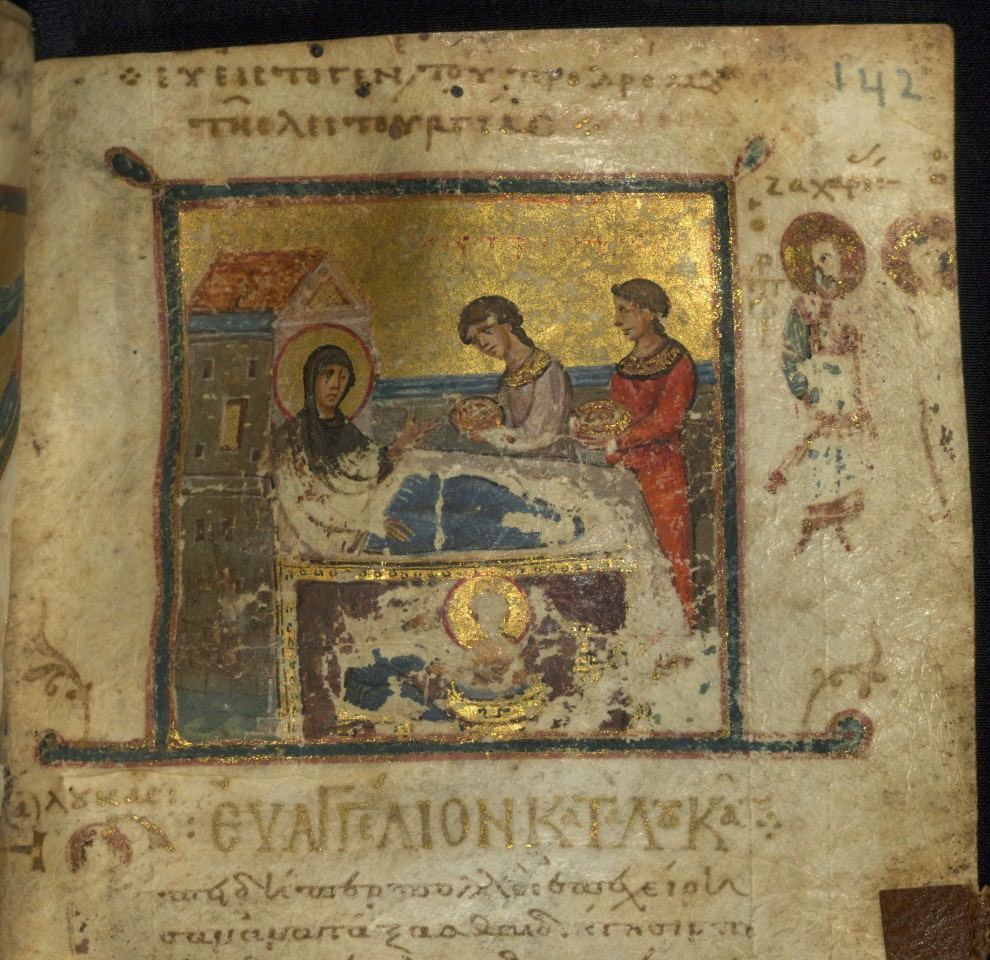
Read the commentaries on the opening of Luke
St. Luke’s feast is Sunday, October 18. Before it comes, here is what early Christian writers said about the four verses he wrote to introduce his Gospel.
by VRSZ Editors · October 11, 2026 · 2 min read
Four verses, one careful writer
Luke is the only Evangelist who opens with a word about his method. Before any angel or manger appears, he explains to a man named Theophilus how and why he wrote. Early readers paid close attention to those lines. Eusebius of Caesarea, writing in the early fourth century, remembered Luke as “a physician by profession” who left behind “in two inspired books, proofs of that spiritual healing art which he learned from them,” meaning the apostles.
Here are four highlights to read before the feast.
Luke 1:1 · “Many have taken in hand”
“Forasmuch as many have taken in hand to set forth in order a declaration of those things which are most surely believed among us.” Eusebius read this as Luke’s reason for writing at all. Others had told the story too hastily, so Luke set out, in Eusebius’s words, “feeling the necessity of freeing us from their uncertain opinions.”
Tap Luke 1:1 on VRSZ.
“Proofs of that spiritual healing art which he learned from them.”
Eusebius of Caesarea · on St. Luke, Church History 3.4
Luke 1:2 · “Eyewitnesses, and ministers of the word”
For Cyril of Alexandria, the striking word is eyewitnesses. How do you see a Word? Because, Cyril writes, “the Word became capable of being seen by reason of the flesh.” Luke, he says, is in agreement with John: “the Word was made flesh.”
Tap Luke 1:2 on VRSZ.
Luke 1:3 · “Having had perfect understanding”
Luke was not one of the Twelve, and he says so plainly. Jerome drew a neat distinction between Luke’s two books: “So he wrote the gospel as he had heard it, but composed the Acts of the Apostles as he himself had seen.”
Tap Luke 1:3 on VRSZ.
Luke 1:4 · “The certainty of those things”
Luke wrote so that Theophilus “mightest know the certainty” of what he had been taught. Irenaeus of Lyons said much the same about all the Gospels: what the apostles first preached aloud, they later “handed down to us in the Scriptures, to be the ground and pillar of our faith.”
Tap Luke 1:4 on VRSZ.
Keep reading
Luke’s Gospel goes on to Zacharias in the temple, the angel’s visit to Mary, and the birth of John the Baptist. Open VRSZ at Luke 1:1 and read on, a verse at a time, with the early commentators beside you.
Luke i. 4
4That thou mightest know the certainty of those things, wherein thou hast been instructed.
Read the commentaries on Luke 1:4Know someone who would want to read this?
Sources quoted
- Eusebius, Church History 3.4.7 and 3.24.15, trans. Arthur Cushman McGiffert (NPNF, 2nd series, vol. 1), newadvent.org/fathers/250103.htm.
- Cyril of Alexandria, Commentary on the Gospel of St. Luke, on Luke 1:2, trans. R. Payne Smith (Oxford, 1859), tertullian.org/fathers.
- Jerome, On Illustrious Men 7, trans. Ernest Cushing Richardson (NPNF, 2nd series, vol. 3), newadvent.org/fathers/2708.htm.
- Irenaeus, Against Heresies 3.1.1, trans. Alexander Roberts and William Rambaut (ANF vol. 1), newadvent.org/fathers/0103301.htm.
- Luke 1:1–4, King James Version.